
My Child’s Treatment Is Completed; How Do We Maintain the Progress and Keep Their Vision from Regressing?
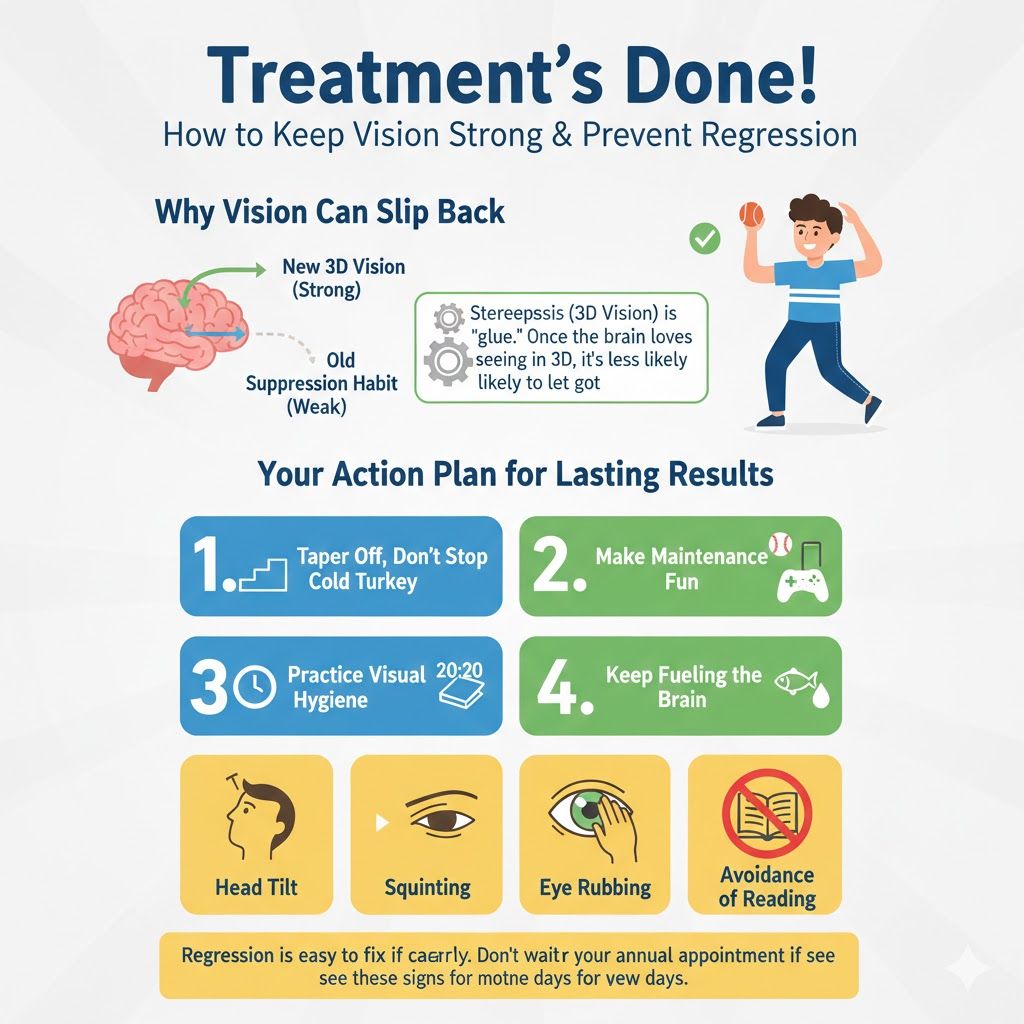
Take a deep breath. You did it. After months (or perhaps years) of adhesive patches, daily eye drops, arguing over glasses, and driving to weekly vision therapy appointments, your doctor has given you the news: “We are done.” Your child’s visual acuity has improved. The eye turn is gone or significantly reduced. They are catching […]
Can Food Improve Vision? The Truth About Diet, Nutrition, and Lazy Eye
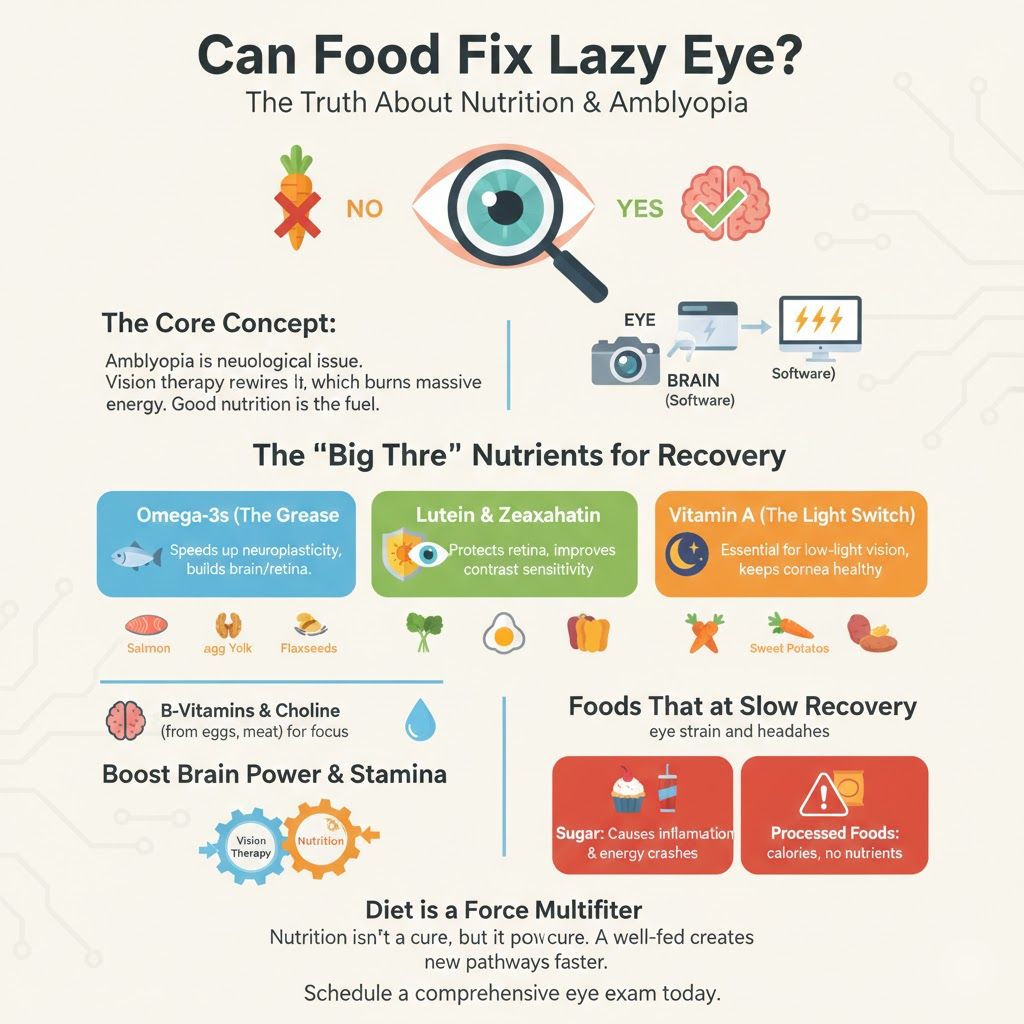
Eat your carrots so you can see in the dark! If you grew up hearing this, you are not alone. It is perhaps the most pervasive myth in vision health. While carrots are good for you, the idea that simply eating a specific vegetable will fix a complex vision problem is misleading. When it comes […]
How Can I Support My Child Throughout the Lazy Eye Treatment Process?

If you are a parent of a child diagnosed with Amblyopia (lazy eye), you likely know the daily struggle. You know the tears when the adhesive patch comes out. You know the arguments about wearing glasses. You know the heartbreak of watching your child struggle with tasks that seem easy for everyone else. It is […]
What Causes a Lazy Eye? A Clear and Simple Breakdown of the Main Risk Factors and Root Problems
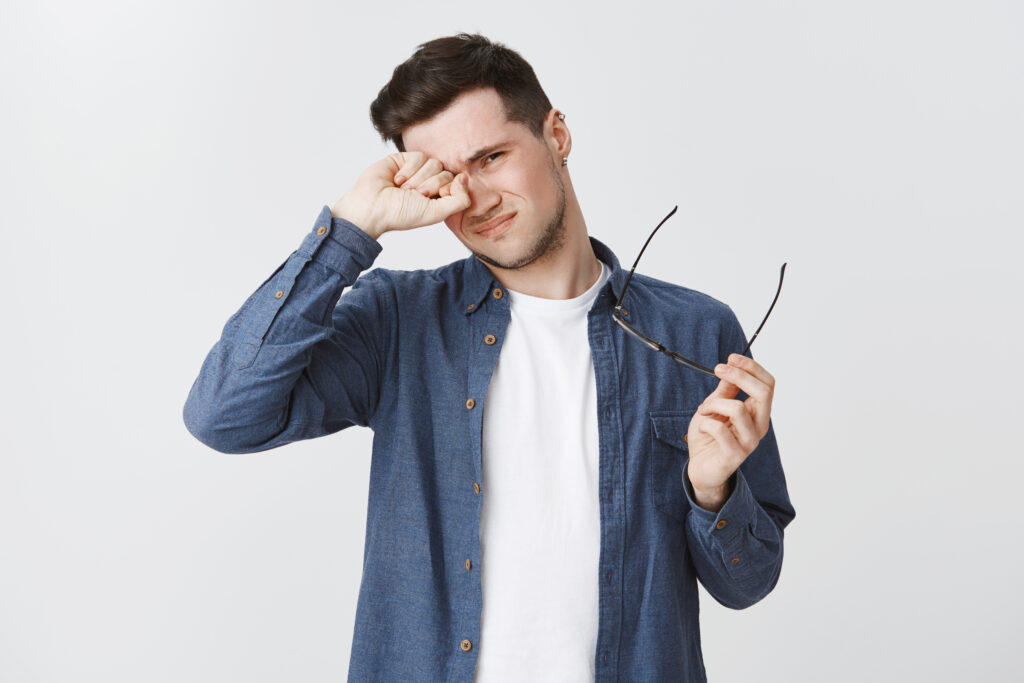
If you have recently heard the term “lazy eye” applied to your child or yourself you might feel a mix of confusion and guilt. The very name is misleading. It implies that the eye is simply not trying hard enough, or that the person is somehow at fault. Let’s set the record straight immediately: Amblyopia […]
A Complete Guide to Understanding Lazy Eye (Amblyopia) for Teenagers

If you are a teenager reading this, you might be feeling frustrated. Maybe you’ve been told that you have a “lazy eye” and that because you didn’t patch it when you were six years old, you missed the boat. Maybe you struggle to catch a baseball, feel clumsy on stairs, or suffer from headaches that […]
How Long Does Vision Therapy Take to Improve Adult Lazy Eye?
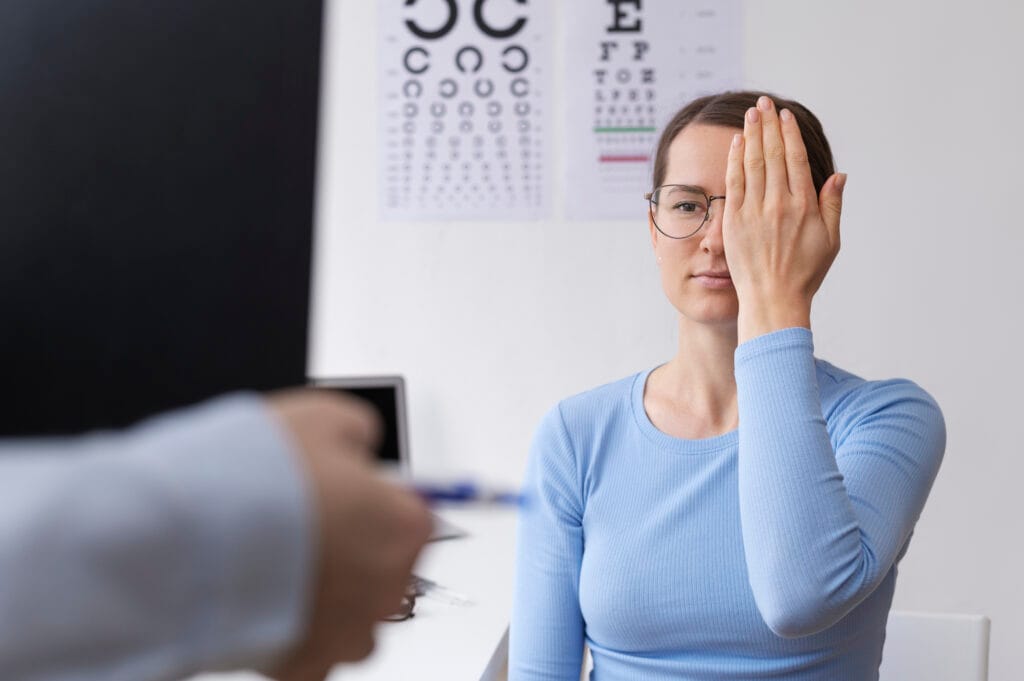
How Long Does Vision Therapy Take to Improve Adult Lazy Eye? Adults with lazy eye (amblyopia) often assume effective treatment is only possible in childhood. Today, vision therapy for adults challenges that myth. At Bynocs, our specialized digital vision therapy programs harness adult neuroplasticity to improve visual acuity, binocular coordination, and depth perception even later […]
How can you treat Amblyopia at home?

How can you treat Amblyopia at home? What is Amblyopia? Amblyopia, also known as lazy eye, is a vision development disorder where an eye fails to achieve normal visual acuity, even with prescription glasses or contact lenses. It typically develops from birth up to age 7 years and is the most common cause of decreased […]